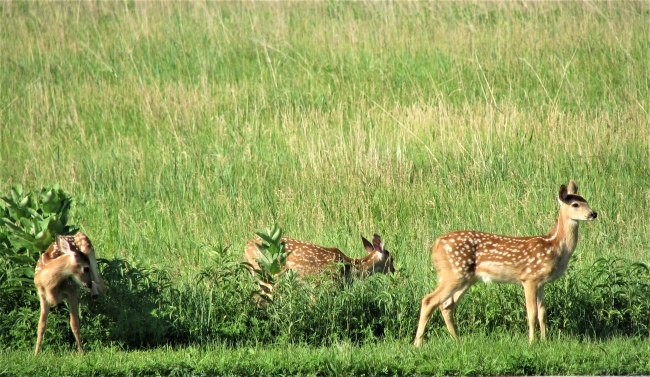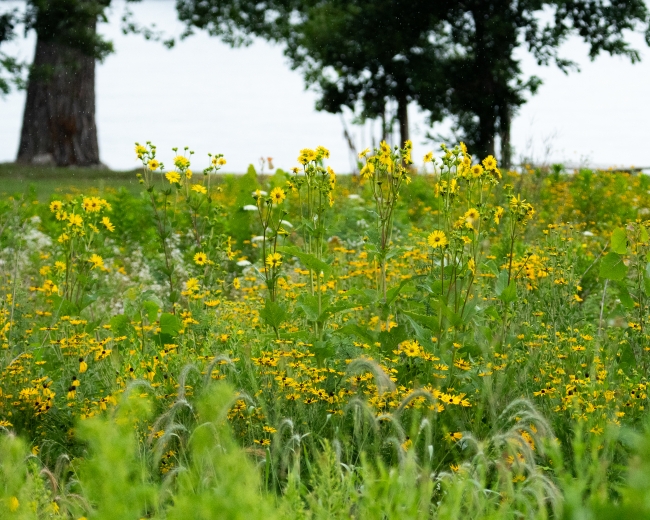
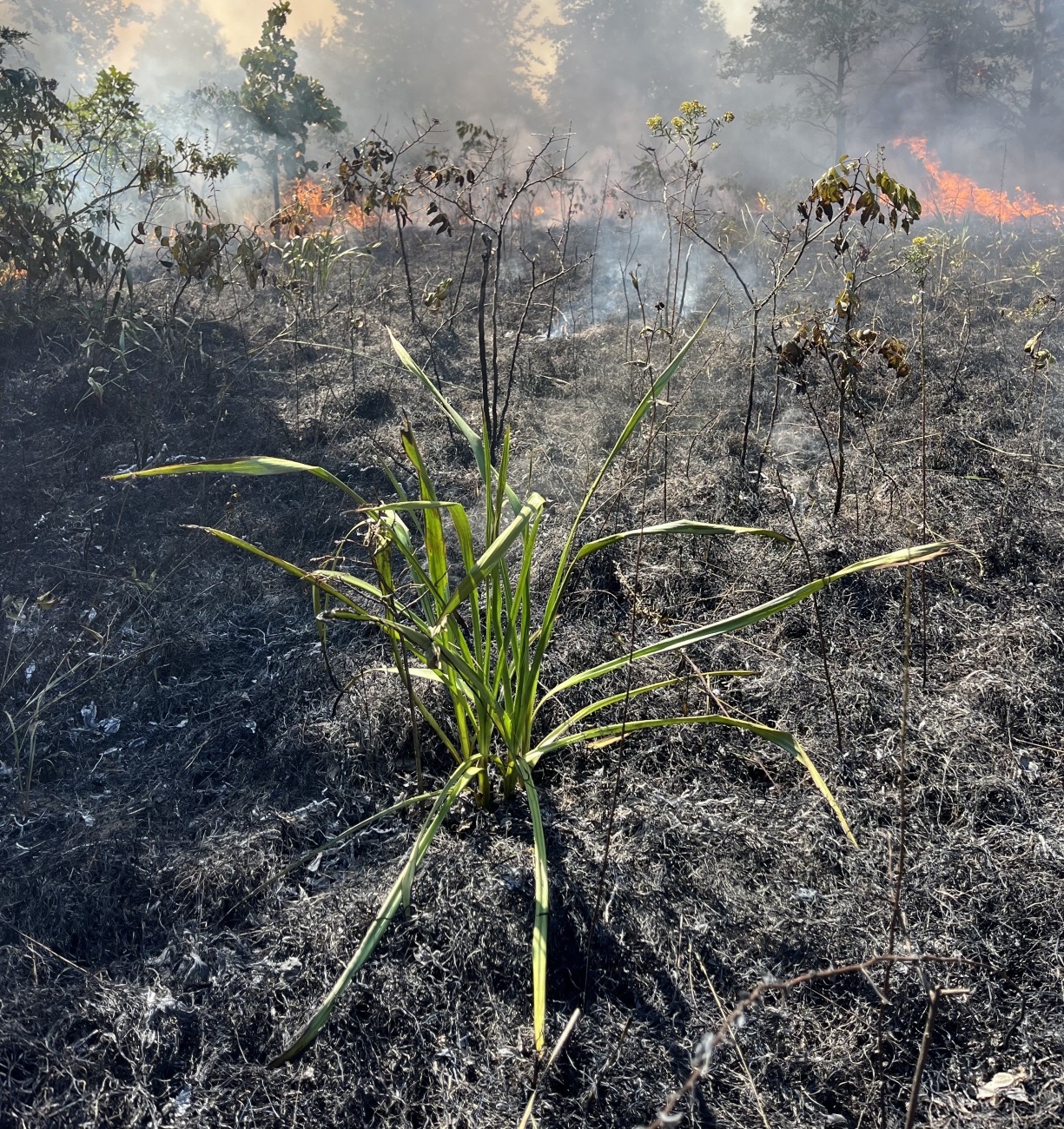
What a study of southeastern pine-hardwood forests found when researchers compared annual burning with a two-year fire-return interval.
The Big Takeaway
Burning mature pine-hardwood stands every year produced more forage capable of meeting higher dietary protein requirements for white-tailed deer during June and July than burning every two years. But annual burning did not significantly increase total forage biomass, and researchers found no statistically significant difference in digestible protein production between the two treatments.
The findings suggest that burning frequency can influence the nutritional quality of the forage available, not simply how much vegetation grows. For deer managers, that distinction matters when deciding how to use prescribed fire alongside other habitat-management practices.
What Did Researchers Study?
In a 2019 study published in Forest Science, researchers Michael P. Glow, Stephen S. Ditchkoff, and Mark D. Smith examined how different prescribed-fire intervals affected forage production and nutritional carrying capacity for white-tailed deer.
The study took place at Three Notch Wildlife Research Foundation in Bullock County, Alabama. Researchers evaluated mature pine-hardwood stands managed under two fire-return intervals: one year and two years.
During 2014 and 2015, they sampled vegetation during three periods when deer can face nutritional challenges: June, July, and September. They measured the biomass of different vegetation groups, analyzed the nutritional quality of selected forage plants, and estimated nutritional carrying capacity at different dietary crude-protein levels.
Nutritional carrying capacity estimates how much deer forage can support under specified nutritional requirements. It is a measure of the potential provided by available forage, not a direct count of the deer a property can sustain in practice.
The researchers wanted to determine whether burning every year rather than every two years increased the availability of forage capable of meeting deer nutritional demands.
What Did the Researchers Find?
Total vegetation wasn’t significantly different
One of the study’s most important findings was that total forage biomass did not differ significantly between the annual and two-year burn treatments during any of the three sampling periods.
The amount of vegetation produced, by itself, therefore did not tell the full story.
Annual burning favored legumes
The composition of the vegetation differed between the treatments.
Legume biomass in annually burned stands was nearly four times greater in June, twice as great in July, and three times greater in September than in stands burned every two years.
Vines showed the opposite pattern in some sampling periods. Vine biomass was at least 2.5 times greater in the two-year treatment during June and September.
These differences show that fire frequency can influence which types of plants contribute to the understory. More vegetation does not necessarily mean more nutritionally valuable deer forage, and different plant groups respond differently to repeated burning.
Annual burning increased the availability of higher-protein forage in early summer
The researchers estimated how much forage was available at several dietary crude-protein levels.
During June, the estimated biomass of forage meeting 14% and 15% crude-protein thresholds was at least three times greater in annually burned stands than in stands burned every two years. Similar patterns were found in July.
The differences in forage meeting the higher protein thresholds were not statistically significant in September, however, although differences remained at some lower protein thresholds.
This is an important qualification: the advantage of annual burning depended on the nutritional threshold being considered and the time of year.
Digestible protein production did not differ significantly
Despite the differences in estimated availability of higher-protein forage, researchers did not find statistically significant differences in digestible protein production between the two burn treatments during June, July, or September.
That finding deserves attention alongside the nutritional carrying-capacity estimates. Annual burning changed the amount of forage available at certain protein levels, but the study did not demonstrate a consistent increase in total digestible protein production.
What Does This Mean for Deer Managers?
Prescribed fire can help maintain an open forest understory where herbaceous plants and other deer forage can grow. How frequently managers burn may influence the types of vegetation that persist and the amount of forage available at different nutritional levels.
For managers of suitable pine-hardwood habitat in the Southeast, annual burning may be worth considering where improving the availability of higher-protein forage is a priority.
But this study does not establish annual burning as the best choice for every property.
Burning frequency involves more than forage production. Frequently burned areas may provide less woody cover and produce less soft mast, including fleshy fruits used by wildlife. Annual burns also require more frequent planning, labor, and expense.
A property managed for deer may benefit from a combination of habitat conditions rather than applying the same fire-return interval everywhere. Some areas could be managed to encourage herbaceous forage, while others are maintained on longer intervals to retain cover and soft-mast resources.
The appropriate balance depends on the existing forest structure, plant community, soils, deer density, management objectives, and other available food sources.
Important Limitations
The study provides useful evidence, but its results should be interpreted within the conditions under which the research was conducted.
First, the research compared one- and two-year fire-return intervals in mature pine-hardwood stands in east-central Alabama. It did not compare every possible burning schedule, including a three- to five-year interval or no burning.
Second, the research was conducted within a 639-acre fenced research property with a high deer density, planted food plots, irrigation for some plots, and supplemental feed. Those conditions differ from many properties managed for free-ranging deer.
Third, the researchers measured vegetation, forage quality, and estimated nutritional carrying capacity. They did not establish that annual burning increased antler size, fawn survival, deer population growth, or hunting success.
The findings are therefore most useful as evidence of how fire frequency can influence forage resources in comparable pine-hardwood systems—not as a guarantee of improved deer performance on every property.
The Bottom Line
Annual prescribed fire produced more forage capable of meeting higher dietary protein requirements during June and July in the pine-hardwood stands examined in this study. However, total forage biomass and digestible protein production did not differ significantly between annual and two-year burning treatments.
For deer managers, the lesson is not simply to burn more often. It is to consider how fire frequency influences plant composition and forage quality, then weigh those benefits against the need for cover, soft mast, and other habitat resources.
Prescribed fire is a management tool, not a universal recipe. Any burn plan should account for site conditions, ecological objectives, local requirements, and appropriate prescribed-fire expertise.
Original Research
Glow, M. P., Ditchkoff, S. S., & Smith, M. D. (2019). Annual Fire Return Interval Influences Nutritional Carrying Capacity of White-Tailed Deer in Pine–Hardwood Forests. Forest Science, 65(4), 483–491.
Read the original peer-reviewed study
Discover more from DeerManagers
Subscribe to get the latest posts sent to your email.